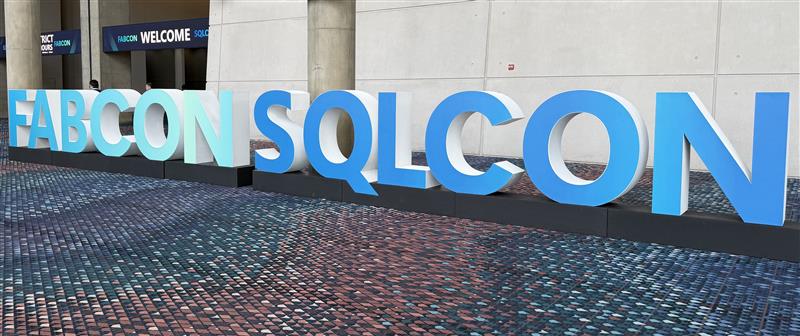
FabCon 2026 made one thing clear: Microsoft is bringing its data stack into one platform, built for AI.
This year’s conference drew over 8,000 attendees to Atlanta, and for the first time, SQLCon joined the event, bringing nearly 300 sessions under one roof. Across sessions and keynotes, one theme dominated: databases and Fabric are coming together into a single platform, with AI built in from the start.
With over 31,000 customers, Fabric is already one of Microsoft’s fastest-growing data platforms, and FabCon proved that momentum is only accelerating.
You can see its impact play out across a few key areas.
SQL Isn’t Going Away. It’s Becoming the On-Ramp to AI
Microsoft is making it easier for organizations to move from existing environments into Fabric, particularly through Azure Arc, which acts as a bridge between on-prem systems and the cloud.
SQL remains foundational, but its role is evolving. It is becoming the entry point into a broader, AI-ready platform.
As more of that data estate connects into Fabric, the next challenge becomes how it’s managed across environments.
A Single View of the Data Estate Is Finally Taking Shape
Data lives in too many places. Too many tools, too many teams, too many environments. Microsoft’s answer is the Database Hub in Fabric, a single place to see, manage, and govern everything happening across your data estate.
With the Database Hub, Microsoft is bringing that into one place. Instead of jumping between systems, teams can see what’s going on across their data estate and manage it from a single view.
The result? Management starts to feel less like monitoring and more like built-in guidance.
Fabric IQ Signals a Bigger Shift
Fabric IQ is Microsoft’s approach to turning raw data into business context.
The more important shift is the introduction of ontologies. These define how a business operates through properties, actions, policies, and objectives, creating a shared layer of meaning that AI systems can work against.
AI success will not come from better models alone. It will come from giving those models consistent, shared context about how a business works.
AI Is Moving into Operations
AI agents are no longer just answering questions. They’re embedded directly in workflows, monitoring data, detecting patterns, and taking action. Microsoft’s Data Agents and Operational Agents make that shift real.
What This Means for Organizations
Taken together, these shifts point to a clear direction.
- Data platforms are becoming AI platforms
- AI is moving closer to core operations, not just experimentation
- Context and governance are becoming as important as access
For most organizations, the challenge will not be whether they can adopt AI. It will be whether they can do it in a way that is consistent, secure, and scalable.
Making AI Work in Practice
Most organizations don’t struggle with access to AI. They struggle with how to operationalize it across teams, data, and use cases without losing control.
As Microsoft brings the data layer together through Fabric, the focus shifts to consistency. That means defining how AI is used, who can access it, and how it’s governed across the organization
This is where platforms like nebulaONE® come into play. Not as another tool, but as a way to create structure around how AI is actually used day to day across the business.
Final Thought
Microsoft is bringing data, infrastructure, and AI into one system. As that happens, the focus shifts from building capabilities to operationalizing them.
For organizations that get this right, the advantage will not come from access to AI. It will come from how effectively they can put it to work.
 by
by