For higher education leaders, the most important AI question is often not whether the technology works. It is whether the institution can make it available broadly, safely, and quickly enough to matter.
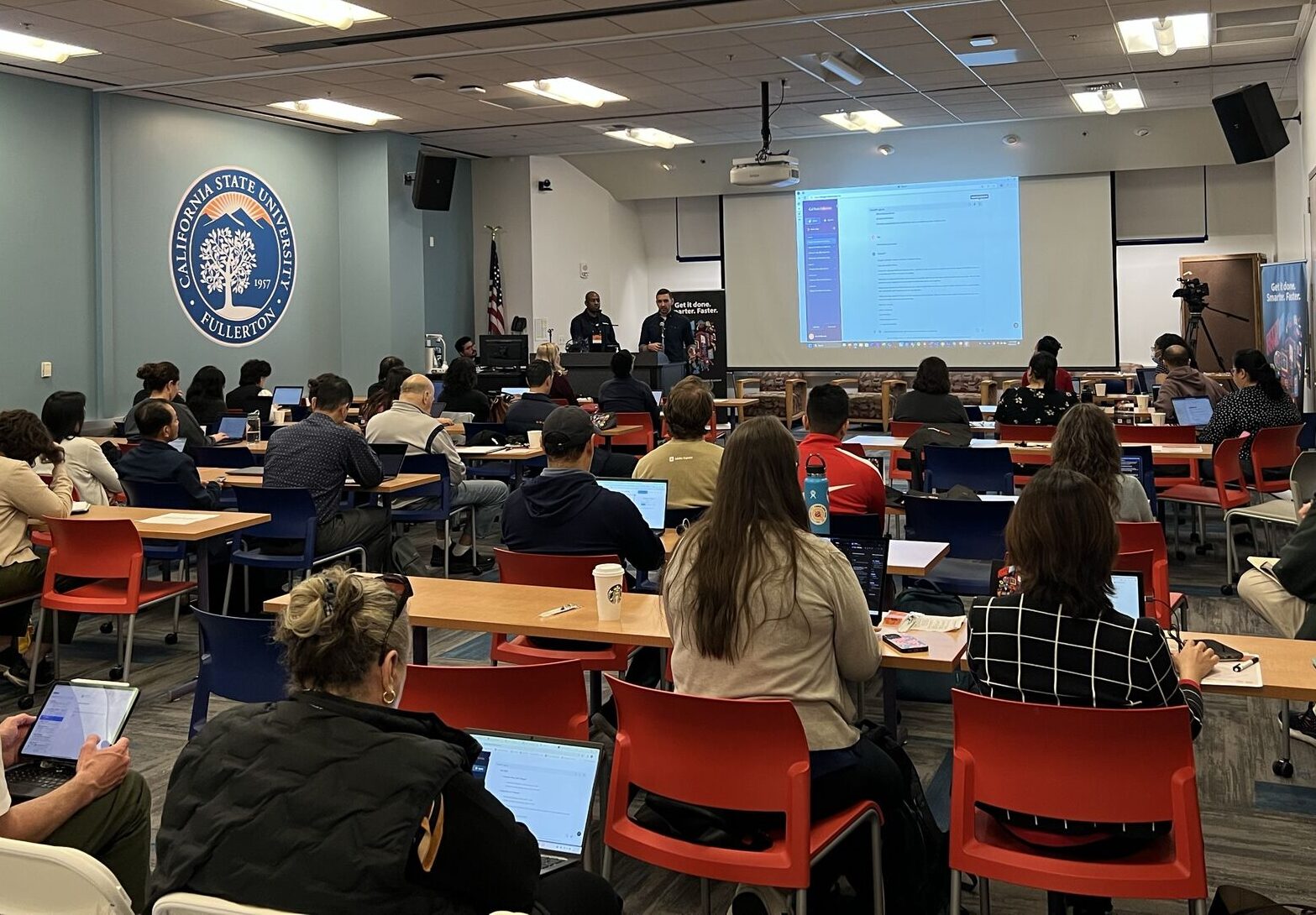
That is why a campus-wide deployment at the scale of 43,000 students is such a useful proof point. Large institutions cannot rely on boutique AI pilots that serve a small group of early adopters. They need approaches that can reach students, faculty, staff, and operational teams without creating a year-long custom build or a support burden the institution cannot sustain.
The lesson from a deployment like Cal State Fullerton is not simply speed. It is what speed required: a clear governance model, a Microsoft-aligned architecture, role-based access, a practical implementation path, and a product experience that could serve a broad community from the start.
The traditional alternative is difficult. Institutions can try to build internally, stitching together model access, user interfaces, identity controls, data connections, logging, and support workflows. That path may create flexibility, but it also introduces delays, engineering dependency, and long-term maintenance obligations. For most universities, the issue is not talent. It is focus. Internal teams are already carrying enterprise systems, cybersecurity, identity, data, and academic technology priorities.
A governed AI platform changes the operating model. Instead of asking the institution to build the AI gateway itself, nebulaONE® provides a branded, governed experience deployed in the customer’s Microsoft cloud environment. The institution keeps control of data and access policies while giving the community a usable AI experience from day one. No dedicated engineering team required on your end.
What this model makes possible
- For executive sponsors: campus-wide access that supports the institution’s AI mandate.
- For IT and security leaders: control, standardization, and alignment with existing Microsoft environments.
- For academic leaders: adoption without forcing every department to improvise its own approach.
- For students and faculty: a governed AI experience they can actually use.
Cal State Fullerton’s deployment demonstrates that speed and governance do not have to work against each other when the architecture is built for institutional scale. Institutions moving from isolated pilots to broad, responsible adoption don’t need to start with a custom build. They can start with a platform built to help campuses move quickly, stay in control, and give their communities access without adding unnecessary burden to internal teams.
Read the full Cal State Fullerton case study to see what this looked like in practice.
 by
by